

The rebel yell PR strategy is one of my favourites.
There are some brands we love a little bit more than others.
We love the brave.
We love the rebels.
We love the misfits.
We love the underdogs.
We love the smart minority. We love those who dare stick their neck out and risk their business.
The rebels we celebrate manage to come out in front of a significant shift in our societal value system. Yes, it’s a question about timing — and a bit of publicity momentum.
Here we go:
Controversy as a PR Strategy
Sparking controversy as a PR strategy is often frowned upon. It’s seen as a cheap trick to attract attention.
Still, brands can reap significant benefits; controversy creates a rift in public opinion between them and us.
Rock and roll were considered devil music by the late majority for quite some time. Unethical, even. It was pushing the boundaries of what was socially acceptable. More importantly, rock and roll is still around today.
After all — Elvis Presley was a rebel.
If being controversial is a powerful PR strategy, what’s the catch? Because there must be a catch, right?
Smoking Rebels
In 1928, George Washington Hill, the president of the American Tobacco Company, hired Edward Bernays, today known as the father of public relations, to help him recruit women smokers.
As a way of displaying a burgeoning movement of women’s rights in the US, female celebrities and influencers started smoking cigarettes out in the open as a sign of emancipation since smoking cigarettes in public was something only “fallen” women did.
Bernays hired women to march while smoking their “torches of freedom” in the Easter Sunday Parade of 1929, a march traditionally well-covered by the media. Of course, this controversy sparked lots of publicity for the cause.
The campaign helped push the women’s movement forward.
That’s good.
But it also persuaded more people to take up smoking.
That’s … not good.
“Make Parents Angry”
Don’t get me wrong. Someone might think that smoking is good or that grown-ups should be allowed to decide what’s best for themselves. I respect that.
But the critical point here is that it’s possible to spark controversy for controversy’s sake. It’s possible to scare people senseless. It’s possible to shock or gross people like American Apparel, who face lots of public outrage for their sexist ads.
Still, American Apparel is pissing some people off. Not everyone. And that’s the key to a successful strategy based on controversy.
The notorious talent manager and film agent Shep Gordon, who pulled off many controversial PR stunts in his long career, summed up his wisdom in this statement: 1Shep Gordon. (2023, December 21). In Wikipedia. https://en.wikipedia.org/wiki/Shep_Gordon
Teenagers especially tend to be interested in controversies that get their parents gasping for air in shock. It’s an act of rebellion.
“Make parents angry!”
— Shep Gordon, talent manager and film agent 2Supermensch: The Legend of Shep Gordon. (2023, December 18). In Wikipedia. https://en.wikipedia.org/wiki/Supermensch:_The_Legend_of_Shep_Gordon
The Amplification Hypothesis
It’s common to find that counterarguments strengthen existing beliefs instead of weakening them.
The harder you attack someone verbally, the more you convince them of their belief, not yours.
The phenomenon is known as the amplification hypothesis, where displaying certainty about an attitude when talking with another person increases and hardens that attitude.
“Across experiments, it is demonstrated that increasing attitude certainty strengthens attitudes (e.g., increases their resistance to persuasion) when attitudes are univalent but weakens attitudes (e.g., decreases their resistance to persuasion) when attitudes are ambivalent. These results are consistent with the amplification hypothesis.“
Source: Journal of Personality and Social Psychology 3Clarkson, J. J., Tormala, Z. L., & Rucker, D. D. (2008). A new look at the consequences of attitude certainty: The amplification hypothesis. Journal of Personality and Social Psychology, … Continue reading
How does the amplification hypothesis work?
In a threatening situation or emergency, we resort to the primal (fastest) part of the brain and survival instincts (fight, flight and freeze). 4Surviving the Storm: Understanding the Nature of Attacks held at Animal Care Expo, 2011 in Orlando, FL.
Establishing common ground and exhibiting empathy demonstrates a genuine understanding of their perspective, fostering trust and openness to your ideas. Conversely, a strategic mismatch of attitudes can serve as a powerful countermeasure if your objective is to deflect persuasive attempts.
Persuade
To persuade, align your attitude with the target. Otherwise, you will only act to create resistance.
Provoke
To put off a persuader, mismatch their attitudes. When they are logical, be emotional, and vice versa.
Learn more: The Amplification Hypothesis: How To Counter Extreme Positions
The Rebel Yell Statement
Copywriter Kevin Rogers published this simple yet effective script to improve your storytelling, the rebel yell statement, named after the legendary rock anthem by Billy Idol.
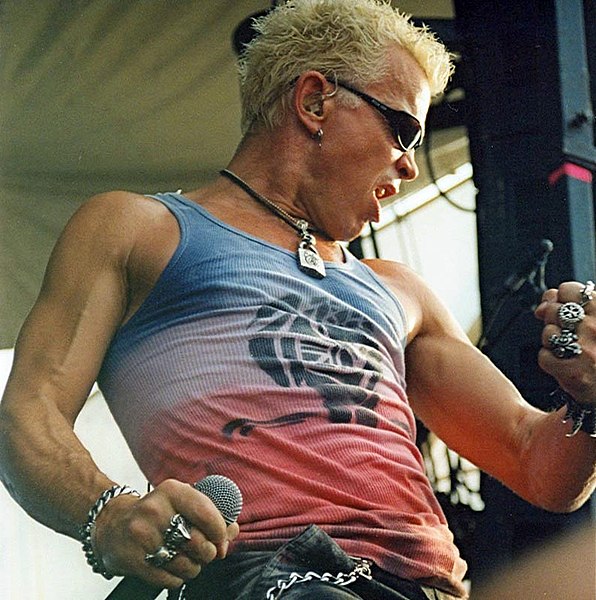
Here’s the rebel yell statement script for you to try:
My name is _________, I love _________ but was fed up with _________. So I created _________ that _________.
Here’s an example by Rogers on Steve Jobs:
My name is Steve, I love computers but was fed up with the snail’s pace of commercial technology. So I created a user-friendly computer that processes information faster than anything else out there today.
Here’s the rebel yell statement I wrote for this blog, Doctor Spin:
My name is Jerry, I love PR, but was fed up with “social media experts” giving clients bullshit advice. So I created Doctor Spin to share actionable insights based on academic research, hands-on experience, and passion.
Learn more: The Rebel Yell Statement
Pick a Fight With a Stronger Foe
There are countless meaningful rebellions for brands to participate in. The secret is to identify a Stupid Majority and a Smart Minority.
Stupid majority = a majority of today that will steadily decline into a minority of tomorrow.
Smart minority = a minority of today that will grow into a new majority of tomorrow.
Alas:
Stupid Majority + Smart Minority = PR Success
Don’t want to fight?
There’s consumerism to rebel against. Capitalism. Communism. Climate. Religion, even. Heck, you could even rebel against technology taking over our lives. Whatever.
Here’s the key to using controversy as a powerful strategy:
You become a rebel by picking a fight with someone stronger than you to create your desired future.
Thanks for reading. Need a PR specialist?
Please contact Jerry for a consultation.
What should you study next?
Spin Academy | Online PR Courses

Spin’s PR School: Free Strategy PR Course
Unlock the power of strategic public relations with this free Strategy PR Course. Elevate your skills and boost your career today.
Public Relations Strategy 101
Public Relations Strategies
Grey-Hat PR Strategies
Learn more: All Free PR Courses
💡 Subscribe and get a free ebook on how to get better PR.

Annotations
| 1 | Shep Gordon. (2023, December 21). In Wikipedia. https://en.wikipedia.org/wiki/Shep_Gordon |
|---|---|
| 2 | Supermensch: The Legend of Shep Gordon. (2023, December 18). In Wikipedia. https://en.wikipedia.org/wiki/Supermensch:_The_Legend_of_Shep_Gordon |
| 3 | Clarkson, J. J., Tormala, Z. L., & Rucker, D. D. (2008). A new look at the consequences of attitude certainty: The amplification hypothesis. Journal of Personality and Social Psychology, 95(4), 810 – 825. https://doi.org/10.1037/a0013192 |
| 4 | Surviving the Storm: Understanding the Nature of Attacks held at Animal Care Expo, 2011 in Orlando, FL. |
| 5 | Silfwer, J. (2017, June 13). Conversion Theory — Disproportionate Minority Influence. Doctor Spin | The PR Blog. https://doctorspin.net/conversion-theory/ |
| 6 | Beck (1999): Homogenization, Dehumanization and Demonization. |
| 7 | Cognitive dissonance. (2023, November 20). In Wikipedia. https://en.wikipedia.org/wiki/Cognitive_dissonance |