

There was no bystander effect — but there is one anyway.
In 1964, Winston Moseley murdered Kitty Genovese.
Kitty Genovese was a 28-year-old New York resident, and the assailant knifed her repeatedly near her home before dragging her into a nearby alley, where he raped her.
Genovese died in the ambulance on her way to the hospital.
Two weeks after the dreadful event, The New York Times ran the story of how 38 people saw Genovese get stabbed, raped, and murdered in the street — and no one came to her aid.
That was how the story was reported.
But that wasn’t exactly what happened.
Here goes:
Bystander Effect
Bystander effect: “Our team has been struggling with the new software integration, but since no one else is speaking up about it, I assume it’s not a big deal.”
The bystander effect occurs when individuals are less likely to act or intervene in a situation because they believe someone else will do so or assume the issue is not urgent. This psychological phenomenon often leads to inaction, especially in group settings where the responsibility for addressing a problem is diffuse or unclear.
In a business context, the bystander effect can result in unaddressed issues, as employees, teams, or leaders hesitate to step in and take responsibility. When no one actively raises concerns or offers solutions, problems can persist or escalate, negatively affecting productivity, morale, and organizational outcomes.
To counter the bystander effect, business leaders must foster a culture of accountability and proactive problem-solving. Encouraging individuals to take ownership of issues, speak up when something isn’t right, and collaborate to find solutions helps ensure that challenges are addressed before they become more considerable obstacles.
Organisations can overcome the bystander effect and drive meaningful progress by emphasizing personal responsibility and creating an environment where all voices are valued.
Waiting for others to stand against evil is its own kind of evil.
Learn more: The Bystander Effect
There Was No Bystander Effect
The dreadful murder of Kitty Genovese became known in scientific literature as the bystander effect, where individuals are less likely to help a victim if there are several bystanders. Genovese’s murder is used as a case study in numerous psychology textbooks.
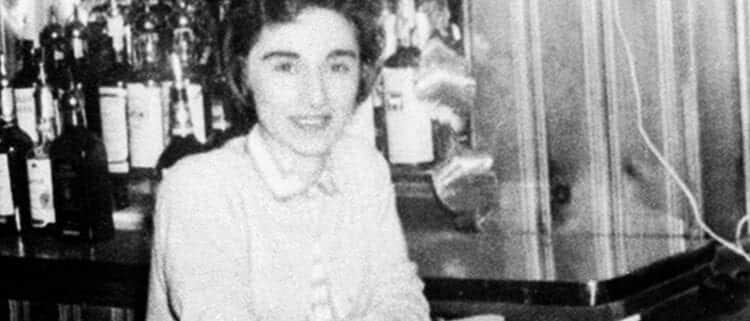
However, the problem was that the media didn’t accurately report Kitty Genovese’s murder.
There were witnesses to the murderer, but they didn’t see enough of what happened to understand that an assault was occurring. They reportedly thought it was a couple arguing.
There was no “bystander effect.”
However, the bystander effect still proved to be a natural phenomenon.
Kitty Genovese’s murder sparked several scientific studies, proving the bystander effect accurate (as a form of diffusion of responsibilities).
One could argue that The New York Times got away with a misleading article since it led to a psychological discovery.
Kitty Genovese and The New York Times
In 2016, when the man convicted of Kitty Genovese’s murder, Winston Moseley, died in prison, The New York Times appended an editor’s note to the online archive of the original article. It reads:
“Later reporting by The Times and others has called into question significant elements of this account. Subsequent Times coverage includes a review of the case on the 40th anniversary; the obituary of the killer; an essay and video on the case; and a Times Insider account.”
Coincidentally, the popular HBO show Girls ran an episode inspired by Kitty Genovese’s death just before word got out on Winston Moseley’s death. And in an editorial that same year, after numerous critical articles about their reporting, The New York Times wrote:
“The facts, however, turned out to be quite different. Yes, some neighbors had ignored Ms. Genovese’s pleas for help. But later investigations found that only a couple of them had a clear sense of what was happening, or had even caught glimpses of the attacks as they occurred. Many of the 38 thought they heard a fight between drunken people or lovers. But reality has, to some degree, been beside the point. A paradigm of danger and indifference in an anonymous city had taken hold.”
The convicted murderer, Winston Moseley, published his thoughts in The New York Times in 1977. It’s a strange read as Mosely, in passing, suggests that his actions came to push society in a positive direction:
“The crime was tragic, but it did serve society, urging it as it did to come to the aid of its members in distress or danger.”
As for the bystander effect, there are implications for our digital age specifically. In 2017, two teenage boys raped a 15-year-old girl while live-streaming the assault on Facebook Live.
NPR (National Public Radio) wrote:
“About 40 people may have watched the rapes on Facebook as they happened, but none of them reported the crimes to the police. That’s raising ethical and legal questions about those who witnessed the crime, including whether they can be charged for their inaction.”
So, why do I feel it’s essential to tell the story about Kitty Genovese and The New York Times?
The Case for Keeping Online Records
As much as we need journalists to report the news daily, we need each report to be correctly indexed, archived, and searchable.
It’s unreasonable, of course, to expect all news to be 100% accurate. By making online archives public, we get another chance to connect the dots of how the media shapes our societal narratives.
Yes, the New York Times misreported the events in the Kitty Genovese case. However, by allowing the general public to search their online archive of old news without doctoring them in hindsight, we all get a better chance of understanding the world we live in today.
This is where The New York Times should serve as a shining example of providing searchable online archives for many news publishers today.
Thanks for reading. Need a PR specialist?
Please contact Jerry for a consultation.
Spin Academy | Online PR Courses

Spin’s PR School: Free Psychology PR Course
Join this free Psychology PR Course to learn essential skills tailored for public relations professionals. Start now and amplify your impact on society today.
Psychology in Public Relations
Group Psychology
Learn more: All Free PR Courses
💡 Subscribe and get a free ebook on how to get better PR.