

David and Goliath is the classic underdog story.
Stories about unexpected champions beating the odds (and powerful enemies) are almost always fascinating.
Here we go:
The Underdog Story: David and Goliath
We know the story:
The story of David and Goliath, originating from the biblical Book of 1 Samuel 17, unfolds in ancient Israel during a war between the Israelites and their long-standing adversaries, the Philistines. The Philistine army, seeking to dominate the Israelites, had set up camp in the valley of Elah, where they positioned themselves on one hill.
At the same time, King Saul and the Israelite forces occupied another. Between them lay an open battlefield. To break the stalemate, the Philistines put forward their ultimate weapon: Goliath of Gath, a towering warrior, described as over nine feet tall (based on some biblical translations), clad in bronze armor, wielding an enormous spear with an iron tip and a massive sword.
Goliath, brimming with arrogance and disdain for the Israelites, issued a challenge — rather than a full-scale battle, the conflict would be settled by single combat: an Israelite champion would face him in a duel, and the fate of both nations would rest on the outcome. For forty days, Goliath strode onto the battlefield, mocking the Israelites and their God, daring any man to challenge him. But Saul’s warriors, paralysed by fear, saw no hope against such an indomitable force.
Enter David, the youngest son of Jesse, a mere shepherd boy from Bethlehem who had been sent to the battlefield to deliver food to his older brothers serving in Saul’s army. Unlike the soldiers, David did not see Goliath’s size as an insurmountable threat but as an affront to Israel and God. He volunteered to fight, much to the astonishment of Saul and his men.
Though initially dismissed due to his youth and inexperience, David convinced Saul by recounting how, as a shepherd, he had slain both lions and bears to protect his flock. Rejecting the heavy armor offered to him, David took his simple sling and five smooth stones from a nearby stream. Facing Goliath, David remained undaunted by the giant’s taunts, declaring that he fought not with weapons but in the name of the Lord. With a single, perfectly aimed stone, David struck Goliath in the forehead, causing the mighty warrior to crash face-first to the ground.
Swiftly, David seized Goliath’s sword and beheaded him, sealing victory for Israel. Upon witnessing their champion’s defeat, the Philistines fled in terror, while David’s triumph marked the beginning of his rise to prominence, eventually leading him to become King of Israel.
Underdogs, Misfits, and Giants
The tale of David and Goliath has become a universal metaphor for the underdog overcoming impossible odds through courage, faith, and skill.
In David and Goliath: Underdogs, Misfits and the Art of Battling Giants, Malcolm Gladwell outlines the dynamic between mapping your and your opponent’s strengths and weaknesses. He goes on to suggest that underdogs have significant advantages:
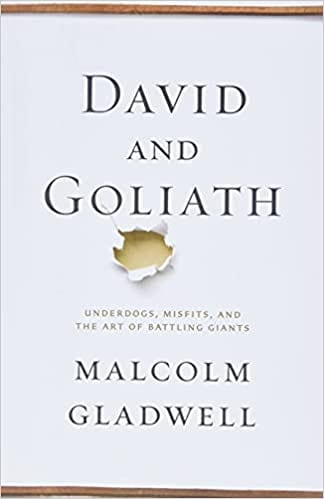
Instead of fighting Goliath on his terms (strength and power), David used his advantages (speed and accuracy). One could argue that David’s disadvantages (being more negligible and less experienced) forced him to outsmart his opponent.
If David had been an experienced warrior with the physical size to match Goliath’s prowess, David would probably have decided to fight him on equal terms, right?
The Obstacle is the Way
The legend of David and Goliath endures as we find comfort in knowing that the strongest doesn’t always win. The underdog approach isn’t just helpful in fighting; it has a proven track record of being highly useful in public relations.
In The Obstacle Is the Way: The Timeless Art of Turning Trials into Triumph, Ryan Holiday describes how choosing the path of the most resistance maximises our growth as both individuals and organisations:
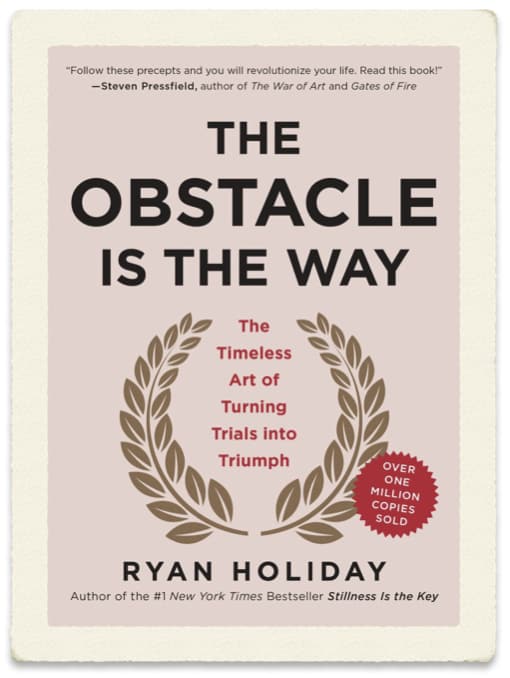
Having the odds stacked against you might not be as bad as it seems at first glance. If nothing else, it’s the start of a great story.
Play To Strength, Exploit Weakness
Yes, David exploits Goliath’s weaknesses (not being fast or accurate enough to beat David from a distance). However, David still chooses to fight Goliath on “his” grounds — to steal away “his” audience. It’s safe to say that only a minority thought that David would beat Goliath before the actual fight.
From a PR perspective, David could emerge from nowhere and beat the market leader by exploiting an interesting social phenomenon: the majority is sometimes just wrong.
Stupid, even.
The fact that a staggering majority of bystanders — including one confident Goliath — never expected David to stand a chance gave him the upper hand.
We celebrate that David chose a better weapon when we should instead celebrate his successful manipulation of the stupid majority; from nowhere, David inserted himself into the top spot in just one bold move.
In the fight against Goliath, we admire David not only for his wits but also for his guts. After all, David did bring a slingshot to a sword fight.
The Classic Underdog Story
Leveraging an underdog public relations strategy to beat a majority leader is not about bringing better weapons; it’s about having guts and taking on a majority that is stupid, incompetent, dead wrong — and more powerful than you.
Some majorities of today are destined to be gone tomorrow.
The more significant and dominant the majority, the more likely it is to consist of a substantial silent majority who are just along for the ride, mainly because everyone else seems to be.
Seeing a minority defeat a majority makes for good entertainment — when the majority is also stupid. From a PR perspective, the big bad is about to beat the underdog against all the odds.
Now that’s a great story, just begging to be told!
Learn more: The Underdog Story: David and Goliath

THANKS FOR READING.
Need PR help? Hire me here.

What should you study next?
Spin Academy | Online PR Courses
Spin’s PR School: Free Storytelling PR Course
Elevate your public relations game with this free Storytelling PR Course. Learn essential and timeless storytelling techniques for effective communication.
Storytelling Elements
Storytelling Scripts
Storytelling Inspiration
Learn more: All Free PR Courses
💡 Subscribe and get a free ebook on how to get better PR.