Digital sharecropping is the phenomenon where content creators or organisations create content on platforms they do not own and have little control over.
Digital sharecropping is the phenomenon where content creators or organisations create content on platforms they do not own and have little control over.
Here we go:
Digital Sharecropping
Nicholas Carr popularised the concept of digital sharecropping in the mid-2000s and is an apt analogy for how modern digital ecosystems function. 1Carr, N. (2006, December 19). Digital sharecropping. Rough Type. https://www.roughtype.com/?p=634
Digital sharecropping = the phenomenon where individuals or businesses create content on platforms they do not own and have little control over, much like sharecroppers in agricultural economies who worked land owned by others. 2Silfwer, J. (2025, March 13). Digital Sharecropping. Doctor Spin | The PR Blog. https://doctorspin.net/digital-sharecropping/
From Agrarian to Digital
To understand digital sharecropping, we must first explore its namesake: traditional sharecropping.
Agricultural sharecropping (post-feudalism to the 20th century). After slavery was abolished in the United States and other parts of the world, landowners needed laborers. Still, newly freed or displaced workers often lacked the resources to own land. Landowners provided small plots for tenants to farm in exchange for a large portion of the crops. This system kept sharecroppers in perpetual debt, unable to gain ownership or escape poverty.
Industrial-era parallels (factory work and gig economy precursors). As economies transitioned to industrial capitalism, a new form of economic dependency emerged. Workers exchanged labor for wages but did not own production means (factories, machinery). This dependency on industrialists set the stage for economic models prioritising profit extraction over individual autonomy.
The rise of the Internet (Web 1.0 to Web 2.0).
Web 1.0 (1990s – early 2000s) was decentralised; users owned personal blogs and websites.
Web 2.0 (2004 onwards) ushered in centralised platforms like Facebook, YouTube, and Twitter, making content creation easier and shifting ownership and control to tech companies. People willingly handed over their content, believing they were gaining access and exposure while, in reality, they were ceding control.
Digital Sharecropping in Everyday Life
Digital sharecropping is ubiquitous, though many do not recognize it. Here are some real-world examples:
Social media influencers and content creators. YouTubers, Instagram influencers, TikTok stars, and Twitter commentators generate valuable content but do not own the platforms. Algorithmic changes can instantly reduce their visibility, demonetize their content, or even erase their accounts. Unlike traditional business owners, they have no direct control over their revenue streams.
Medium, Substack, and other creator platforms. Many writers abandoned personal websites for Medium, Substack, and LinkedIn Articles. While these services provide audience access, they control monetisation, discovery algorithms, and policy changes. Writers who build audiences there are at the mercy of the platform’s business model. Writers who build audiences there are at the mercy of the platform’s business model.
Musicians and artists on Spotify, Apple Music, and YouTube. Musicians used to rely on album sales; now, they depend on streaming services that pay fractions of a cent per stream. Platforms dictate terms, often taking the majority of profits while artists remain financially vulnerable.
The Gig Economy: Uber, Airbnb, Fiverr, and Etsy. Workers and small business owners rely on platforms they do not control. Uber drivers, for instance, do not set fares or terms of service. Etsy sellers depend on algorithms that determine their visibility.
Corporate dependency on Big Tech ecosystems. Businesses relying on Amazon Marketplace or Google SEO are in a precarious position. Amazon can undercut third-party sellers with private-label products. Google’s algorithm updates can obliterate organic traffic overnight.
Effects on Cultures and Societies
Digital sharecropping has profound effects on economics, culture, and power structure.
Economic dependence and precarity. Unlike traditional business models where entrepreneurs owned their infrastructure, today’s digital entrepreneurs rent digital real estate. Platform risk means livelihoods can vanish overnight due to policy shifts, algorithm changes, or corporate whims.
Cultural monopoly and information control. A handful of corporations (Meta, Google, Amazon, etc.) act as gatekeepers of culture, deciding which voices are amplified or suppressed. Deplatforming, demonetization, and algorithmic censorship affect who gets heard.
Algorithmic manipulation and user behavior engineering. Digital landlords (platforms) use algorithms to maximise engagement, often promoting polarising content over nuanced discourse. This alters not only what people see but how they think and behave.
The death of digital sovereignty. In Web 1.0, users owned their digital presence (e.g., personal blogs, independent forums). Most digital identities exist on rented land — social media profiles, corporate platforms, and SaaS products.
How To Escape Digital Serfdom
Digital sharecropping is not sustainable in the long run. To avoid being a digital serf, consider these strategies:
Own your digital presence. Maintain a personal website instead of relying solely on social media. Use email lists instead of renting audiences via social platforms.
Diversify your online footprint. Do not put all your eggs in one basket. Spread your work across multiple channels.
Monetise directly when possible. Use direct payment models instead of relying on ad-based monetisation.
Digital sharecropping is an elegant yet insidious evolution of economic dependency. Just as traditional sharecroppers found themselves trapped in a cycle of labor without ownership, today’s digital creators, gig workers, and entrepreneurs are building wealth for platforms rather than themselves.
The future is uncertain — will we break free and return to decentralised, user-owned digital spaces, or will AI-driven, corporate-controlled ecosystems tighten their grip?
The question is:
Will you be a digital peasant or a digital landowner?
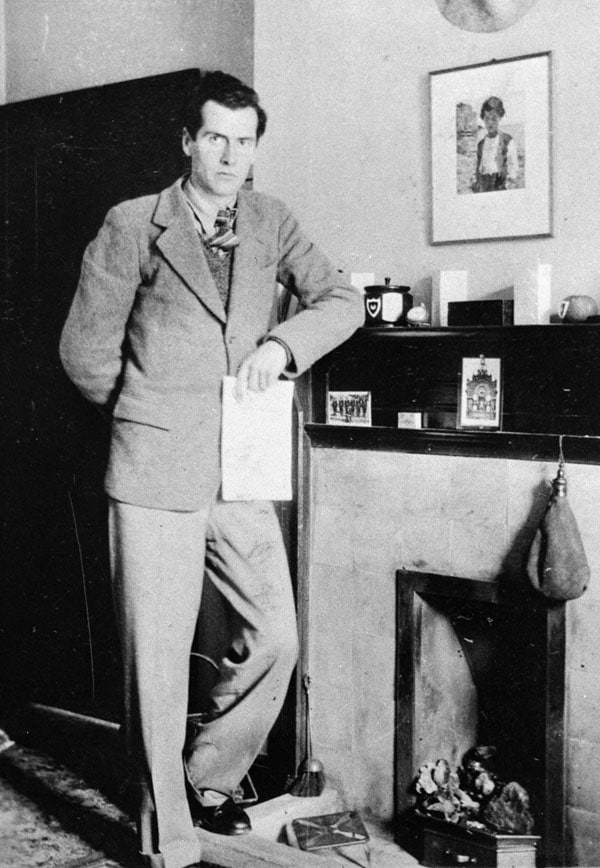
Marshall McLuhan at Cambridge University, circa 1940.
McLuhan’s Four Epochs
McLuhan suggests dividing human civilisation into four epochs:
Oral Tribe Culture. Handwriting marks the beginning of the end of the Oral Tribe Culture. The Oral Tribe Culture persists but without its former prominence.
Manuscript Culture. Printing marks the beginning of the end of the Manuscript Culture, which persists but without its former prominence.
Gutenberg Galaxy. Electricity marks the beginning of the end of the Gutenberg Galaxy. The Gutenberg Galaxy persists but without its former prominence.
Electronic Age. Today, we reside in the Electronic Age. Possibly, we haven’t experienced the beginning of this age’s decline yet.
“The Gutenberg Galaxy is a landmark book that introduced the concept of the global village and established Marshall McLuhan as the original ‘media guru’, with more than 200,000 copies in print.” Source: Modern Language Review3McLuhan, M. (1963). The Gutenberg galaxy: the making of typographic man. Modern Language Review, 58, 542. https://doi.org/10.2307/3719923
“The Electronic Age,” according to Marshall McLuhan.
As a PR professional and linguist, I subscribe to the concept of the Electronic Age. I firmly believe society is unlikely to revert to the Gutenberg Galaxy.
Like the rest of society, the PR industry must commit to digital-first, too. Mark my words: It’s all-in or bust.
Thanks for reading. Need a PR specialist? Please contact Jerry for a consultation.
What should you study next?
Spin Academy | Online PR Courses
Free digital-first PR course.
Spin’s PR School: Free Digital-First Course
Get started with this free Digital-First PR Course and learn essential public relations skills and concepts for future success in the PR industry.
Jerry Silfwer, alias Doctor Spin, is an awarded senior adviser specialising in public relations and digital strategy. Currently CEO at Spin Factory and KIX Communication Index. Before that, he worked at Whispr Group NYC, Springtime PR, and Spotlight PR. Based in Stockholm, Sweden.
The Cover Photo
The cover photo isn't related to public relations obviously; it's just a photo of mine. Think of it as a 'decorative diversion', a subtle reminder that it's good to have hobbies outside work.
The cover photo has
Sunrise over a forest by a lake.
.
Subscribe to SpinCTRL—it’s 100% free!
Join 2,550+ fellow PR lovers and subscribe to Jerry’s free newsletter on communication and psychology.
What will you get?
> PR commentary on current events.
> Subscriber-only VIP content.
> My personal PR slides for .key and .ppt.
> Discounts on upcoming PR courses.
> Ebook on getting better PR ideas.
Subscribe to SpinCTRL today by clicking SUBSCRIBE and get your first free send-out instantly.