

Organisations are struggling with the PESO paradox.
Allocating media budgets has never been trickier.
“The challenge in attributing media budget allocation to purchase probability is that the true probability of purchases is extremely small and difficult to accurately model.“
Source: Ranking and Calibrating Click-Attributed Purchases in Performance Display Advertising 1Chaudhuri, S., Bagherjeiran, A., & Liu, J. (2017). Ranking and Calibrating Click-Attributed Purchases in Performance Display Advertising. Proceedings of the ADKDD’17. … Continue reading
Why is it so difficult to set up a reliable framework to accurately determine how to distribute your investments across paid, earned, shared, and owned media channels?
Here we go:
The PESO Paradox
According to the PESO model, there are four types of media channels.
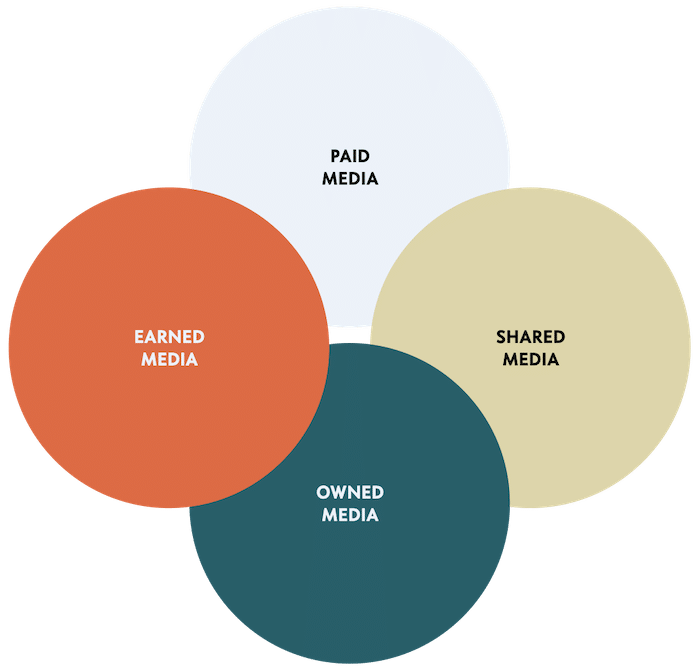
These four types of media channels are:
How do you categorise these four types of media channels?
Categorisation = Corporate Function
A popular approach is to divide them based on corporate function:
Marketing (Corporate Function)
Communications (Corporate Function)
Categorisation = Corporate Control
Another approach is to divide the PESO media channels based on corporate control:
Total (Corporate Control)
Partial (Corporate Control)
Indirect (Corporate Control)
Categorisation = Corporate Value
A third but central approach to the PESO media channels is based on conversion/monetisation strategies:
Awareness (Corporate Value)
Transactional (Corporate Value)
The various above perspectives force organisations to face problematic paradoxes:
The PESO paradox = paid, earned, shared, and owned media channels can be grouped in different ways that are equally and simultaneously true but also strategically conflicting, which creates a measurement problem (comparative validity) for organisations.
How do you set up a reliable process to accurately determine how to distribute your media channel investments?
Typical PESO Considerations
Here are some typical considerations of the PESO paradox:
Please note: The PESO model has “fuzzy edges” due to various hybrid media forms. For example, you can run campaign banner ads or social forums on your website or add advertising spots within editorial social media content.
Learn more: The PESO Paradox
The Leaky Funnel Problem
By definition, businesses have a bottom line:
Money.
The most widespread approach to solving the PESO paradox of allocating resources between different types of media channels is to trace each marketing- and public relations activity to a final transaction.
This is done via a funnel.
“Digital funnels of sales, combining search optimization and web analytics, are key components in digital marketing, promoting website advancement and increasing sales volume.“
Source: Research of the marketing instruments of adoption of management decisions in the field of planning and business development 2Zinchenko, A., & Kolosova, V. (2019). Research of the marketing instruments of adoption of management decisions in the field of planning and business development. Vestnik Universiteta. … Continue reading
Suppose your funnel aims to attract social media awareness to produce inbound traffic to your website. There, you convert visitors into email subscribers who are primed to convert into transactional customers over time. In that case, it’s possible to calculate the monetary value of a single social media click based on the average order value — or customer lifetime value.
When counting conversion rates backwards, organisations often find that one transaction at the bottom of the funnel requires one million social media impressions at the top.
The Cost of Wasting Attention
Simply put: Funnels leak.
Converting one user out of a thousand impressions is something. Letting 999 users down is—everything.
In the eyes of funnel-centric organisations, the value of an individual’s attention gets diminished to a fraction of a marketing dollar — when attention is arguably an invaluable resource.
This approach is a “100% pure marketing mindset” — and extremely problematic.
In the eyes of funnel fundamentalists, we are demographic entities stripped of our essence, mere puppets of consumption with wallets in place of hearts.
So, how must we think about funnels?
Learn more: The Leaky Funnel Problem
Thanks for reading. Need a PR specialist?
Please contact Jerry for a consultation.
What should you study next?
The PESO Model
I often use the PESO model to underscore the critical differences between marketing (paid media) and public relations (earned, shared, and owned media).
The PESO model divides the media landscape into four different media channel types:
Don Bartholomew, vice president of digital research at Fleishman Hillard, presented a version of the PESO model in 2010. According to PR blogger and PR measurement expert Heather Yaxley, his 2010 article is likely to be the earliest mention of the model:
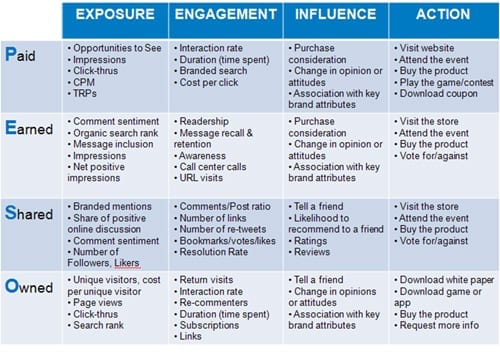
In 2013, PR blogger Gini Dietrich popularised the PESO model on her blog — and later trademarked! — her heavily promoted and widely spread infographic.
“In June 2013, Gini Dietrich presented the first iteration of the PESO model you may recognise in a blog post: The Four Different Types of Media. It was followed in August by the post Mobile Marketing: Use the Four Media Types in Promotion, where she talked about integrating paid, earned, owned, and shared.”
Source: PRConversations.com 3Yaxley, H. (2020, June 28). Tracing the measurement origins of PESO. PRConversations.com. https://www.prconversations.com/tracing-the-measurement-origins-of-peso/
“It is also worth pointing out this 2010 McKinsey Quarterly article by David Edelman and Britan Salsburg that includes sold and hijacked media alongside what used to be called POEM (paid, owned and earned media). Both of these concepts still have value even though their execution has changed in the past decade.“
Source: PRConversations.com 4Yaxley, H. (2020, June 28). Tracing the measurement origins of PESO. PRConversations.com. https://www.prconversations.com/tracing-the-measurement-origins-of-peso/
Learn more: The PESO Model: Paid, Earned, Shared, and Owned Media
Annotations
| 1 | Chaudhuri, S., Bagherjeiran, A., & Liu, J. (2017). Ranking and Calibrating Click-Attributed Purchases in Performance Display Advertising. Proceedings of the ADKDD’17. https://doi.org/10.1145/3124749.3124755 |
|---|---|
| 2 | Zinchenko, A., & Kolosova, V. (2019). Research of the marketing instruments of adoption of management decisions in the field of planning and business development. Vestnik Universiteta. https://doi.org/10.26425/1816 – 4277-2019 – 2‑24 – 27 |
| 3, 4 | Yaxley, H. (2020, June 28). Tracing the measurement origins of PESO. PRConversations.com. https://www.prconversations.com/tracing-the-measurement-origins-of-peso/ |